Introduction
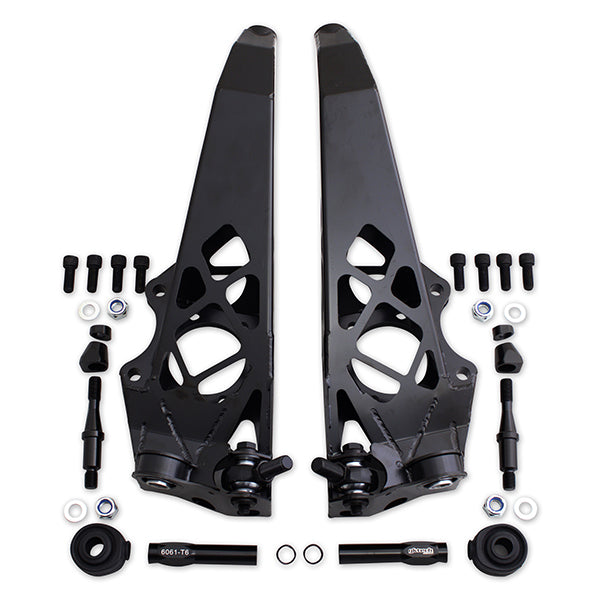
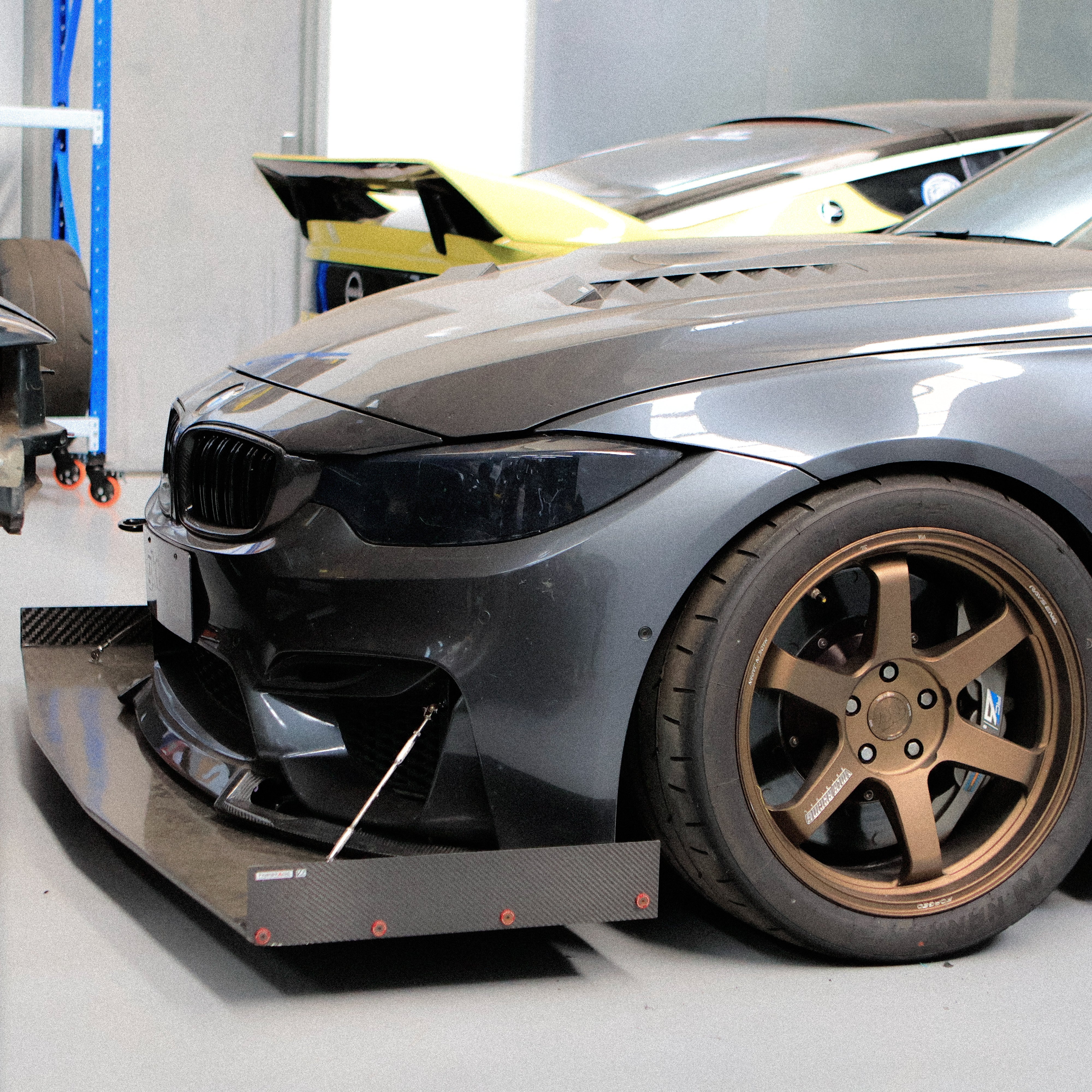
With the Z34 platform growing in popularity and with development underway on our supercharged LS-powered Proto Z for WTAC - we felt it was the right time to create a drift-specific upright for the Nissan 370Z / RZ34 platform.
Our aim was to build on the success of our 350Z upright while bringing the features drivers love across to the Z34 chassis. Figure 1 - FLUX LS-Z
Geometry Design Ethos
Before jumping into design, we first needed to define what geometry changes we wanted to make. We started with an open discussion among the drifters here at GKtech about the driving characteristics we wanted from the new drift upright. Our Z34 bolt-on steering kit (SSTR kit) has been a success, but because it’s a bolt-on product, there are limitations to how much of the factory geometry we can alter, and as such, there are certain aspects of the geometry that can be improved.
A new upright removes those restrictions entirely and gives us full freedom to redesign the geometry from the ground up. We decided that it was a priority to retain the self-steer behaviour of the SSTR kit while offering better lock, and to improve upon other geometry issues present with the SSTR kit.
Bump Steer
Looking at the geometry of the SSTR kit as a starting point, one of the key areas we improved with the Super Lock Drift Knuckle (DKNK) is the bump steer curve. Because the SSTR is a bolt-on product, there are limited locations where the outer tie rod can be mounted. Therefore, the bump steer curve is not optimised, which results in toe-out under bump.
With the open geometry design on the DKNK, there was now free reign to set up whatever bump steer characteristic we desired. The design we opted for was a slight toe-in under bump to offer additional straight-line stability and a predictable handling feel. However, we also included a couple of bump steer adjustment shims, so drivers can further reduce or increase the bump steer to tune the car to their liking.
 Figure 2 - Bump Steer Graph
Roll Centre Heights
When a vehicle is lowered, the roll centre heights are altered compared to the OEM vehicle. Without getting too into the technical details, the roll centre height plays a role in the balance of the vehicle as well as in the roll stiffness. While the SSTR goes some way to correct this RC height change, the DKNK goes further, fully restoring the RC height to align with the OEM RC position at the OEM height.
 Figure 3 - Roll Centre Height Graph
New FLCA and Lock Stop Design
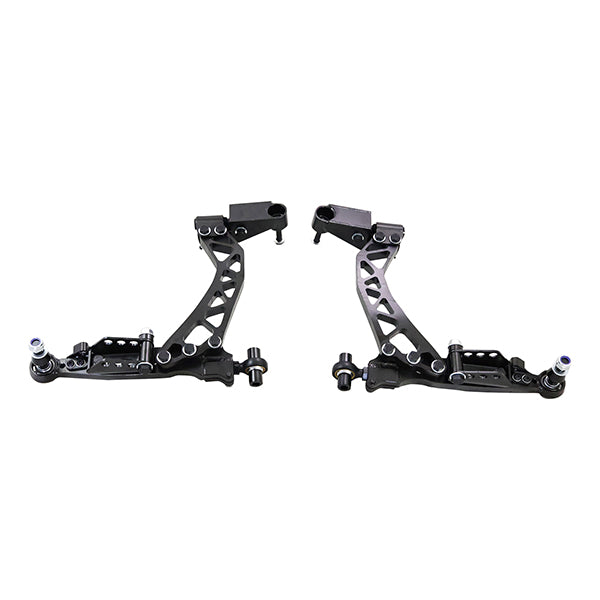
With the open design book for the DKNK, we wanted to include as much lock as possible. One of the changes that allowed this increase in lock was the move to double-shear mounting of the FLCA to the upright. This does require the use of our latest FLCA design, but it greatly improves the strength of the upright when operating at large lock angles. This updated FLCA also provided the opportunity to update our lock stop design. The new design includes a range of adjustment shims, so the lock stop position cannot shift or move when on track.

Figure 4 - New FLCA and Lock Stop Design
Lock Angles and Wheel Options
The new DKNK design has excellent clearance up to very high lock angles, up to 70 deg! In most use cases, your choice of wheel and tyre combination will be the limiting factor when it comes to lock angles. Note that at very high lock angles, the low Ackermann setting and offset rack spacers may be required. When fitting a new combination, it is important to check where the lock limitation is and adjust the lock stop accordingly.
The DKNK is designed to work with the OEM wheels, as well as most common aftermarket wheel sizes. With the OEM wheel and tyre size, around 50 degrees of lock is the limit for lock angle.
 Figure 5 - OEM Wheel and Tyre Package Lock Angle
However, when looking at a more typical wheel and tyre combination, the lock angle is more significant. This is a good example of the type of wheel and tyre package we would recommend and it is what we run on our proto Z.

Figure 6 - Typical Drift Wheel and Tyre Package Lock Angle
Conclusion
The updated DKNK upright represents a major step forward for the Z34 platform. By starting with a clean slate, we were able to address the limitations of the SSTR kit and refine the geometry in every key area. The result is improved bump steer, a properly restored roll centre, increased lock through a stronger double-shear FLCA design, and a more predictable self-steer feel that gives drivers greater confidence on track.
Together with the new FLCA and adjustable shim system, the DKNK offers a level of tuning and consistency that simply isn’t possible with bolt-on solutions. We’re continuing to test and refine the setup, and we’re excited to bring these improvements to Z34 drivers looking for maximum angle, control, and reliability.