Developing a Kinematics Package for the Rear of an F80 M3
Introduction
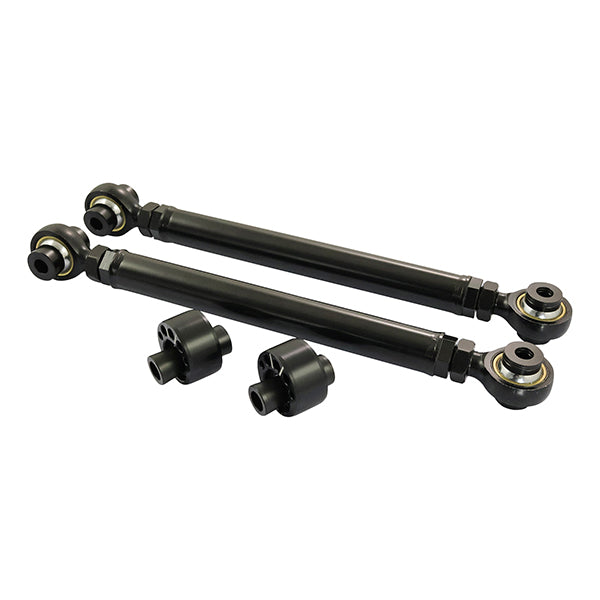
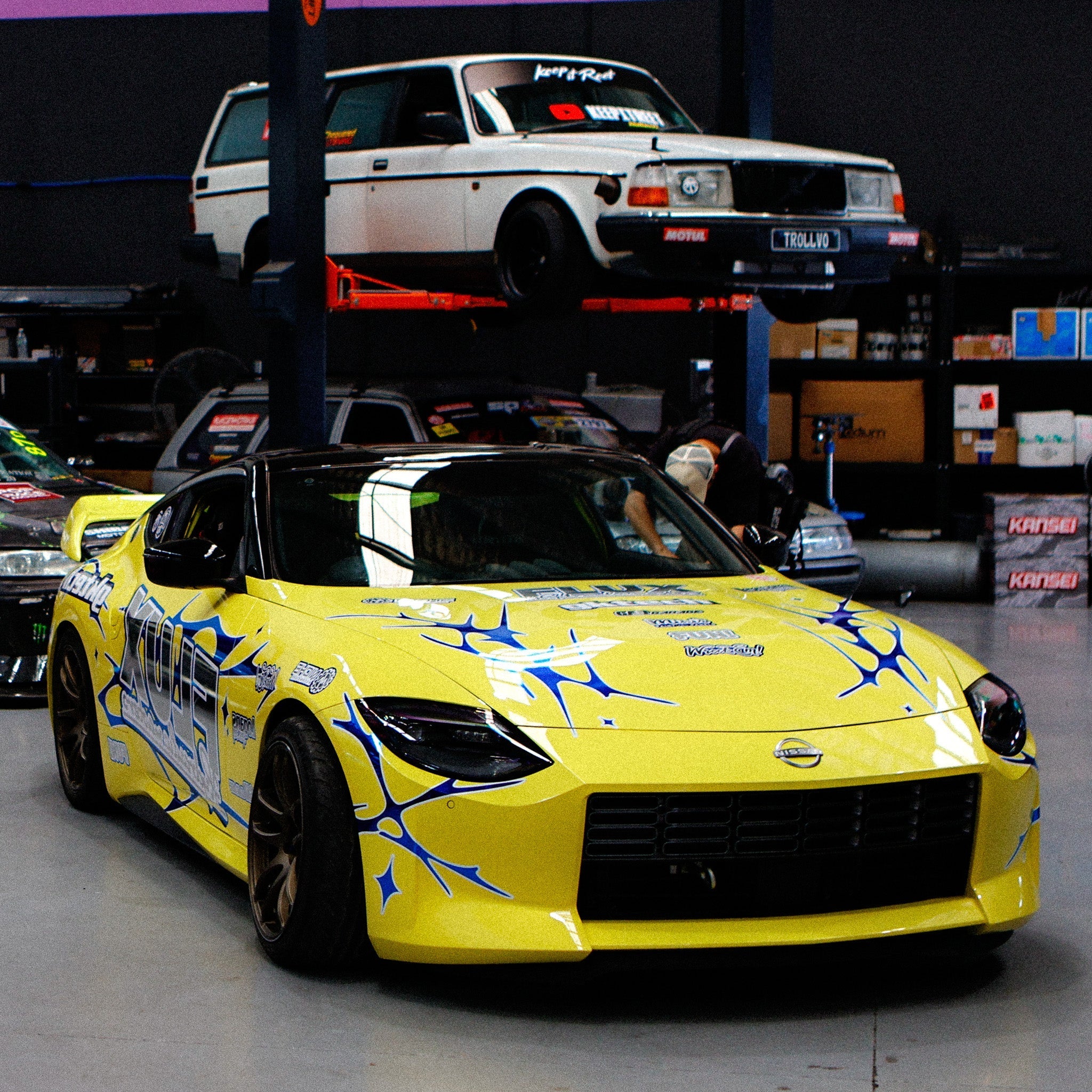
The F80 M3 here at GKTECH started from humble beginnings. It began as a stock M3 track car which offered an exciting level of performance. But as it always does, one mod turned into two, and pretty soon we were developing all kinds of suspension parts for the chassis. After making adjustable arms for the rear of the car, we decided it would be beneficial to dive deeper into the suspension geometry to better understand what is going on at the rear of the vehicle and if there were potential improvements to be made. So, we broke out the 3D scanner and got to work developing a CAD model of the rear suspension geometry for analysis.

Figure (a): GKTECH F80 M3
Roll Centres and Why They Matter
One of the most critical considerations when analysing suspension geometry is the roll centre. When cornering, all vehicles will develop some amount of roll, as the body rolls, the point in space which the body rotates around is known as the roll centre.
With 3D scans of the subframe and upright, along with a host of other measurements, we were able to calculate the height of the roll centre. From this we can also determine the distance between the centre of mass and the roll centre, this distance is known as the roll moment arm (see figure (b)). The roll moment arm is important, as it plays a role in determining how much the body rolls for a given corner and speed (roll gradient).

Figure (b): F80 M3 Roll Centre Diagram
Lowering your vehicle offers significant performance benefits, however as shown in figure (b), it also alters the position of the roll centre and increases the length of the roll moment arm. An increase in the roll moment arm is best thought about as an increase in the length of a lever. By increasing the lever, the vehicle body has more leverage to roll and will result in higher roll angles.
BMW's design team for the M3 would have made careful consideration of the height of the roll centre, and the corresponding roll angles of the vehicle. Seeing that it had moved so far from the OEM position when lowering the vehicle is definitely not an optimal outcome. This is where we saw an opportunity to offer a product which corrects the roll centre back towards the OEM value for lowered vehicles.
Roll Centre Correction:
The F80 rear suspension is of a multi-link arrangement with 5 individual arms. Because of this, adjustment to the roll centre is not as straightforward as other vehicles where extended ball joint or a spacer can do the job. However, we found that by replacing the OEM bearing in the upright with a new eccentric bearing (figure (c)), that the position of the roll centre could be adjusted back towards the OEM Value.

Figure (c) F8XX-RKBK Eccentric Upright Bearing
It can be seen in figure (d) when comparing the OEM vehicle to when the vehicle is lowered by 50mm, the roll moment arm increases significantly. Due to the suspension style of the rear geometry, there is not much that can be done about the roll moment arm increasing as the vehicle is lowered. However, the roll centre height itself can be adjusted, so that when the vehicle is lowered the change in the roll moment arm is not as drastic. This enables the vehicle to obtain all of the performance benefits which come from the lowered centre of mass, while minimising the negative effects on the roll centre.

Figure (d) Roll Moment Arm Change Through Suspension Travel
The Significance of Bump Steer
As discussed earlier with regard to lowered vehicles and the roll centre height, changes to suspension geometry in one area can often have unintended affects in other areas. This is exactly the case with regard to bump steer. By lowering the vehicle, or installing our eccentric upright bearing, the bump steer behaviour at the rear of the vehicle is also changed.
Bump steer refers to the tendency of a vehicle's wheels to steer themselves (toe) when the suspension moves up or down, such as when driving over bumps or dips in the road, or as the vehicle rolls. In specific motorsport applications bump steer can adjusted as a tuning tool, but generally wheels should move up and down with minimal change in toe. Too much bump steer can make a vehicle undrivable, so making sure that it remains within manageable limits is essential to vehicle performance. Keeping this is mind, we have added bump steer adjustment shims to the rear toe arms to give adjustment options as required.
As a general rule toe out in bump is undesirable at the rear of the vehicle and should be avoided wherever possible. So, when adjusting the bump steer, keep in mind that we are essentially looking to adjust the amount of toe in in bump, rather than taking the bump steer the other way.
“Although it is possible to make your car faster by playing with bump steer, it is equally possible to make your car undriveable by doing so.”
Tune to Win - Carroll Smith
Bump Steer Adjustment
Rather than offering a specific offset to adjust the bump steer, we have designed a series of shims to be included with our rear toe link. These offer 5 different adjustment positions to enable you to get the optimal adjustment for many different vehicle setups. These range from raised 4mm, to lowered 4mm in 2mm increments. In the below graphs, the most typical vehicle setups are investigated. First, see the OEM bump steer and how it changes when the vehicle is lowered.

Figure (e) Bump Steer Adjustment options for Lowered vehicles vs OEM.
The graph in Figure (e) demonstrates how the bump steer behaviour changes as the vehicle is lowered. The blue line represents the OEM setup, while the other lines show progressively lowered configurations. As the vehicle is lowered, the bump steer curve becomes less aggressive, resulting in less toe change per unit of suspension movement. While this can lead to a more stable and predictable handling characteristic, it also deviates from the OEM design. This deviation may reduce performance by affecting the vehicle's responsiveness and agility, which are likely optimized in the original setup.

Figure (f) Comparing the different Bump Steer Curves of the GKtech Kinematics Kit on a 50mm Lowered Vehicle to the OEM Bump Steer at OEM height
With the kinematics kit installed and the vehicle lowered 50mm, the bump steer is significantly reduced compared to the OEM value. To make the bump steer more aggressive and closer to the OEM specifications, which may offer a more familiar driving experience, you can use the 2mm lowered option with the shims. This adjustment will provide a bump steer curve most similar to the OEM setup in bump, ensuring a driving feel and vehicle predictability that drivers are accustomed to.
Conclusion
In summary, the development of our kinematics package for the F80 M3 highlights the intricate balance required when modifying suspension geometry. Lowering a vehicle can offer significant performance benefits, but it also introduces challenges such as altered roll centres and altered bump steer curves. By utilizing 3D scanning and modelling, we've created solutions like the eccentric upright bearing and adjustable bump steer shims to address these issues.
Our approach ensures that drivers can enjoy the advantages of a lowered centre of mass while maintaining the handling characteristics they expect from their vehicles. The bump steer adjustment options provide the flexibility needed to fine-tune performance and achieve a driving feel that is both familiar and predictable. Ultimately, our kinematics kit enhances the vehicle's performance while preserving its predictability and drivability. This allows enthusiasts to confidently explore the limits of their F80 M3 on the track.